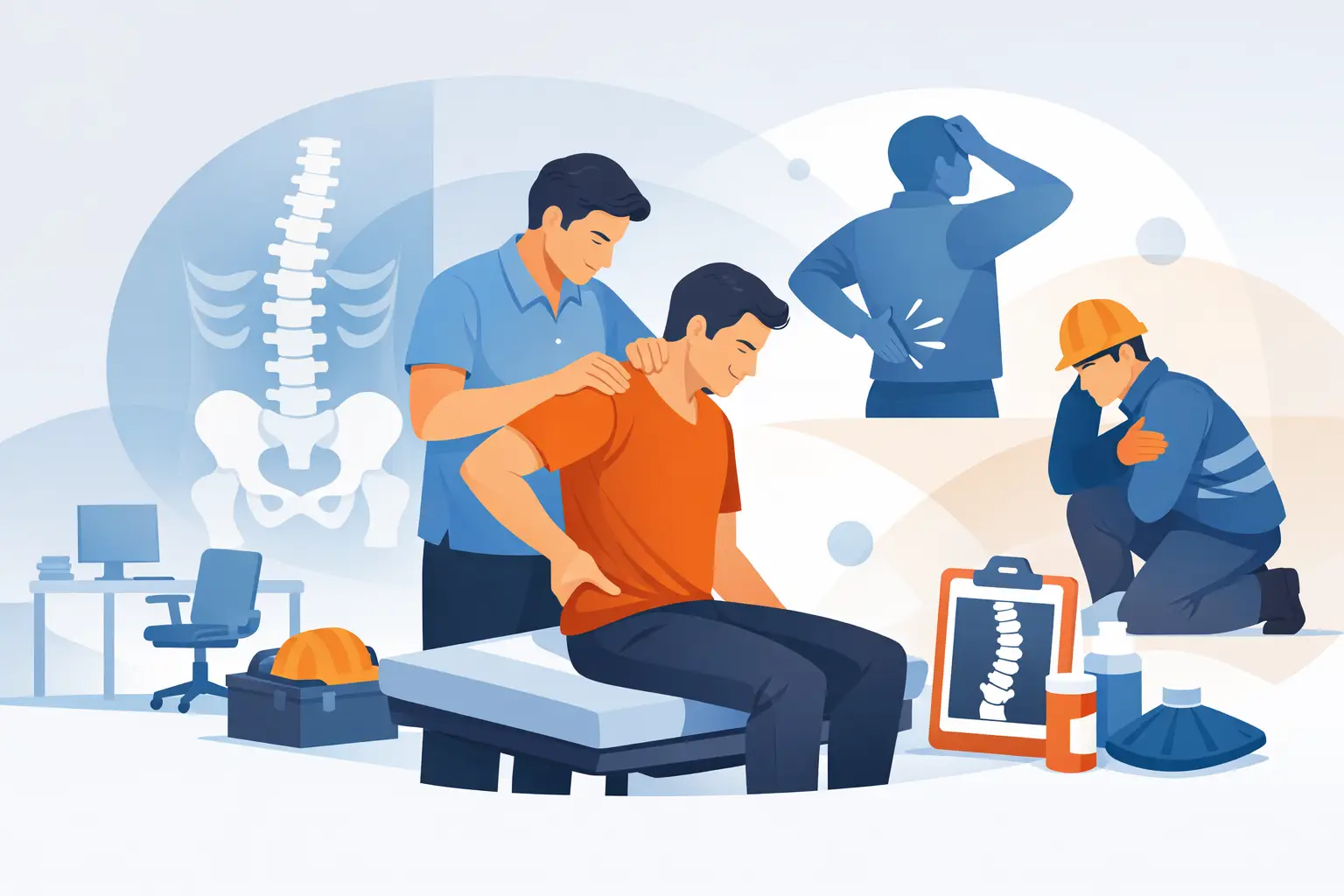
A sore back after one difficult lift, a stiff neck after months at a computer, or shoulder pain that flares every time you reach overhead can make a normal workday feel much longer. Chiropractic care for work injuries gives many people a non-surgical option for addressing pain, restricted movement, and the physical strain that can interfere with earning a living and enjoying life outside of work.
The right next step depends on the injury, your job demands, and your overall health. A personalized evaluation can help determine whether chiropractic treatment, massage therapy, modified activity, coordination with another provider, or a combination of approaches is appropriate for you.
How Work Injuries Affect More Than Your Shift
Work-related injuries do not always begin with a single accident. Sometimes the cause is obvious: a fall, a sudden twist, a lifting injury, or an impact. Other times, discomfort develops gradually from repetitive motions, prolonged sitting, standing on hard surfaces, driving, looking down at a device, or working in awkward positions.
These stresses can affect the muscles, joints, and surrounding tissues of the spine and extremities. You may notice low back pain when getting out of bed, neck stiffness while checking mirrors on a drive, headaches after a long screen-heavy day, or a shoulder that no longer reaches as comfortably as it used to. When movement hurts, people often compensate without realizing it. That can place extra strain on another area of the body.
Pain is not something you should simply push through. Early attention may help prevent a minor problem from becoming a longer-lasting limitation. It can also give you practical guidance on how to move more safely while you recover.
Chiropractic Care for Work Injuries: What It Can Address
Chiropractic care focuses on the relationship between the spine, joints, muscles, and movement. After a work injury, a chiropractor may assess posture, range of motion, areas of tenderness, joint function, and the movements that bring on symptoms. The goal is not just to locate where it hurts. It is to understand how the injury is affecting the way your body moves.
For appropriate patients, treatment may include gentle chiropractic adjustments, hands-on soft tissue work, therapeutic massage, stretching, and recommendations for movement or activity changes. Care is tailored to the individual. Someone with pain from warehouse lifting needs a different plan than an office professional with neck tension and headaches from long hours at a desk.
Chiropractic care may be helpful for common work-related concerns such as low back strain, neck pain, muscle tightness, stiffness, headaches connected to neck tension, and reduced mobility after repetitive physical work. It can also be part of a recovery plan after an accident or sudden workplace strain when a chiropractor determines that conservative care is suitable.
Relief and Better Movement Work Together
Pain relief matters, especially when discomfort is keeping you from sleeping, concentrating, or completing routine tasks. But recovery is often more useful when it also improves confidence in movement. A treatment plan may focus on helping you turn your head more comfortably, bend with less restriction, sit through a meeting without constant shifting, or return to daily activities with fewer limitations.
That does not mean every injury responds at the same pace. A recent muscle strain may improve differently than pain that has been building for years. Consistency with the recommended plan, the physical demands of your job, and your ability to modify aggravating tasks can all influence progress.
What to Expect at Your First Visit
A first visit should begin with listening. Your chiropractor will ask about the injury, when symptoms began, what makes them better or worse, your medical history, and the work tasks involved. Be specific about lifting, repetitive movements, driving, standing, computer use, or any activity that consistently triggers pain.
The exam may include checking your posture, mobility, strength, and areas of discomfort. Based on those findings, the doctor can discuss whether chiropractic care is a good fit and what a recommended treatment plan may involve. If your symptoms point to a condition that needs imaging, medical evaluation, or another type of specialist, a responsible provider will guide you toward the appropriate next step.
At Summit Chiropractic & Massage, care is built around your needs rather than a one-size-fits-all schedule. That means your plan can reflect both your symptoms and the real-world demands waiting for you at work and at home.
When Massage Therapy May Support Recovery
Muscle tension often becomes part of a work injury, even when it was not the original cause. For example, a painful low back can lead to tight hips and guarded movement. Neck discomfort can create muscle tension through the shoulders, which may contribute to headaches or make desk work more difficult.
Massage therapy can complement chiropractic care by addressing tight, overworked muscles and helping the body relax. For some patients, this combination supports more comfortable movement and makes it easier to participate in the stretches or activity changes recommended during treatment.
The best approach depends on your condition. Deep pressure is not appropriate for every injury, particularly when an area is very acute or inflamed. Your care team can recommend an approach that matches your current stage of recovery.
Practical Changes That Protect Your Progress
Treatment is most effective when it is paired with realistic changes between visits. You may not be able to redesign your job, but small adjustments can reduce unnecessary strain. A person who sits for much of the day may benefit from brief movement breaks and a more supportive workstation setup. Someone who lifts regularly may need coaching on body mechanics, load limits, or how to avoid repeated twisting under weight.
Pay attention to patterns. If your pain spikes during one specific task, write it down. Details such as the time of day, the position you are in, the weight you are handling, or how long you have been sitting can help shape a more practical care plan.
Rest has a role, but complete inactivity is not always the answer. Depending on the injury, gentle movement can help prevent stiffness and maintain function. Your chiropractor can help you understand which movements are reasonable and which should be temporarily limited.
Work Injury Claims and Communication
If your injury happened on the job, notify your employer according to your workplace procedures and seek care promptly. Keep records of when the injury occurred, what you were doing, symptoms you experienced, and any changes in your ability to perform your duties. Follow any claim or reporting requirements that apply to your situation.
Be open with your care provider about whether you have a workers’ compensation claim, an attorney, work restrictions, or documentation needs. Clear communication helps the clinic provide accurate records and coordinate care when appropriate. Coverage rules and authorization requirements can vary, so it is wise to confirm the details of your individual claim and insurance plan.
When You Need Urgent Medical Attention
Many work-related aches and strains can be evaluated with conservative care, but some symptoms require immediate medical attention. Seek urgent evaluation for severe or worsening weakness, numbness in the groin area, loss of bowel or bladder control, chest pain, shortness of breath, a major head injury, loss of consciousness, or pain after significant trauma.
You should also be evaluated promptly if pain is accompanied by fever, unexplained weight loss, or symptoms that are rapidly getting worse. Chiropractic care is one part of healthcare, not a substitute for emergency evaluation when warning signs are present.
A work injury can affect your paycheck, your energy, and the activities you look forward to after clocking out. Getting clear answers and a care plan built around your body and your job can help you take a steadier step toward feeling comfortable, capable, and supported again.