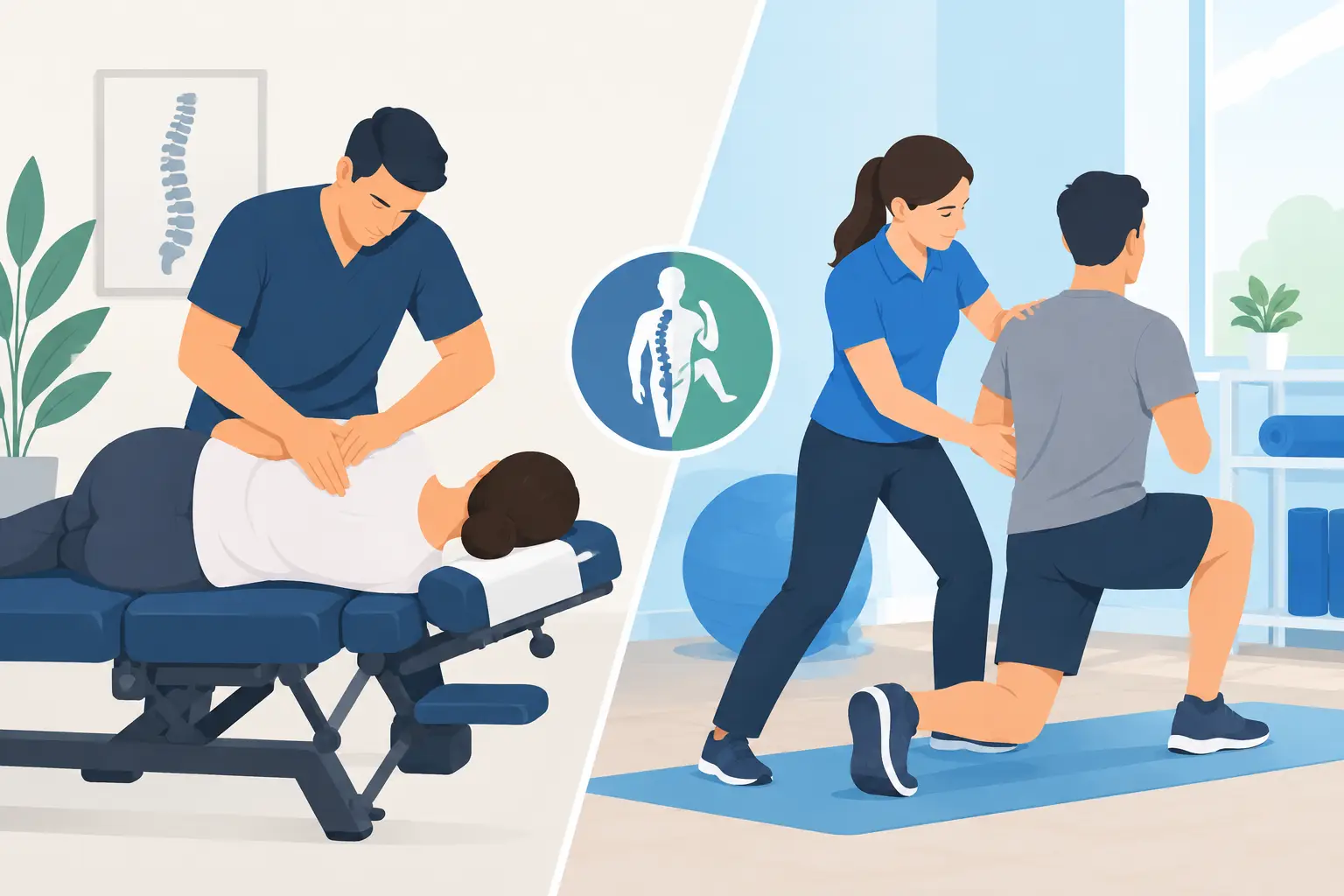
A stiff neck that makes checking traffic difficult, low back pain after a long workday, or a sore shoulder that will not settle down can leave you asking a practical question: chiropractic vs physical therapy, which is right for me? Both can help people move with less pain and more confidence. The best choice depends on what is causing your symptoms, your goals, your health history, and the type of care that fits your needs.
For many people, the decision is not an either-or choice. Chiropractic care, physical therapy, massage therapy, home movement strategies, and guidance from other healthcare providers can all have a place in a thoughtful recovery plan.
Chiropractic vs Physical Therapy: The Main Difference
Chiropractic care focuses on the relationship between the spine, joints, muscles, and nervous system. A chiropractor evaluates how your body is moving, where joints may be restricted, and how posture, strain, injury, or daily habits may be contributing to discomfort. Care may include chiropractic adjustments, hands-on muscle work, movement recommendations, and guidance for supporting better function between visits.
Physical therapy centers on restoring movement and function through therapeutic exercise, education, hands-on treatment, and rehabilitation planning. A physical therapist may help patients rebuild strength, improve balance, increase range of motion, or return to a specific activity after an injury, surgery, or period of reduced mobility.
There is meaningful overlap. Both approaches may address back pain, neck pain, joint stiffness, sports injuries, and movement limitations. Both should begin with a careful assessment rather than a one-size-fits-all treatment plan. The difference often comes down to the primary emphasis of care and what will help you make progress at this stage of recovery.
When Chiropractic Care May Be a Good Fit
Chiropractic care is often a practical option when pain or stiffness seems connected to restricted joint motion, muscle tension, repetitive strain, posture, or everyday movement demands. Someone who spends hours at a computer, regularly lifts children, works a physical job, or has discomfort after exercise may benefit from a hands-on approach that addresses how the body is functioning as a whole.
People commonly seek chiropractic care for low back pain, neck pain, headaches associated with neck tension, shoulder or hip discomfort, and reduced flexibility. After a minor auto accident or other injury, chiropractic evaluation may also help identify areas of stiffness and muscle guarding that are making ordinary movement difficult.
An adjustment is not simply about making a joint pop. When appropriate, chiropractic adjustments are intended to improve joint motion and reduce restriction. Your chiropractor may also recommend soft-tissue work, stretching, changes to work or sleep positions, and simple movements that support lasting improvement.
At Summit Chiropractic & Massage, care is personalized around the way your symptoms are affecting your life. For one person, that may mean being able to sit through meetings without low back pain. For another, it may mean turning their head comfortably while driving, returning to the gym, or getting through a family walk without a flare-up.
When Physical Therapy May Be a Better Starting Point
Physical therapy may be especially helpful when your main need is structured rehabilitation. This can include rebuilding strength after surgery, recovering from a significant injury, improving balance after a fall, or progressing through a sport-specific return-to-activity plan.
For example, a person recovering from a torn ligament, joint replacement, stroke, or major fracture often needs a carefully measured exercise program. Physical therapists are trained to assess functional limits and guide progressive exercises over time. They may use tools such as gait training, balance work, resistance exercises, and activity-specific drills.
Physical therapy can also be valuable for persistent pain when fear of movement or deconditioning has become part of the problem. Gradually rebuilding tolerance for bending, lifting, walking, climbing stairs, or reaching overhead can be an essential part of returning to normal routines.
That does not mean chiropractic care has no role when exercise is needed. Many chiropractic treatment plans include home movement recommendations. The question is whether you need a rehab program that is the central focus of your care, or whether hands-on chiropractic treatment and mobility support are the more immediate priority.
Can You Benefit From Both?
Often, yes. Pain relief and movement restoration do not always happen in a straight line. A person may need hands-on care to make movement more comfortable, then need progressive exercise to build strength and confidence. Another patient may be doing well with physical therapy but still have stubborn neck or low back stiffness that responds to chiropractic care.
Massage therapy can also complement either approach. Tight muscles can make it harder to move well and can contribute to aching, headaches, and a feeling of constant tension. Therapeutic massage may help ease muscle tightness, support circulation, and make stretching or exercise feel more manageable.
The most useful care plan is coordinated around clear goals. If you want to return to gardening, play with your grandchildren, train for a race, or work comfortably at your desk, your provider should understand that goal and shape care accordingly.
Questions to Ask Before Choosing Care
Before scheduling, consider what has changed in your body and what you want to get back to doing. Think about when symptoms started, whether there was an accident or specific injury, what movements make things worse, and whether you have tried anything that helped.
It is also reasonable to ask a provider how they evaluate your condition, what treatment may involve, and how progress will be measured. You should understand why a recommendation is being made and what you can do at home to support it.
A good provider will not treat a diagnosis on paper alone. They will listen to how symptoms affect your work, sleep, exercise, and family life. They will also adjust recommendations when your response to care calls for a different approach.
Know When to Seek Medical Evaluation First
Not every case of back, neck, or joint pain should begin with chiropractic care or physical therapy. New or severe symptoms may need prompt medical attention. Seek urgent evaluation for symptoms such as significant weakness, loss of bowel or bladder control, numbness in the groin area, chest pain, sudden severe headache, fainting, fever with severe back pain, or pain following a serious accident.
You should also speak with a medical provider when pain is unexplained, steadily worsening, accompanied by unexplained weight loss, or associated with a history of cancer, osteoporosis, or significant health concerns. Safe care starts with identifying situations that need medical testing, medication, or specialist treatment.
Choosing the Care That Supports Your Life
The chiropractic vs physical therapy decision is less about picking a winner and more about matching care to your current needs. If joint restriction, muscle tension, and everyday strain are limiting how you move, chiropractic care may be a helpful starting point. If you need focused rehabilitation, strength rebuilding, or recovery after surgery or a major injury, physical therapy may be the better first step.
You do not have to solve every detail before asking for help. A clear conversation with a qualified provider can help you understand what is contributing to your discomfort and what a realistic path forward may look like. The right plan should leave you feeling informed, supported, and more able to do the things that matter to you.