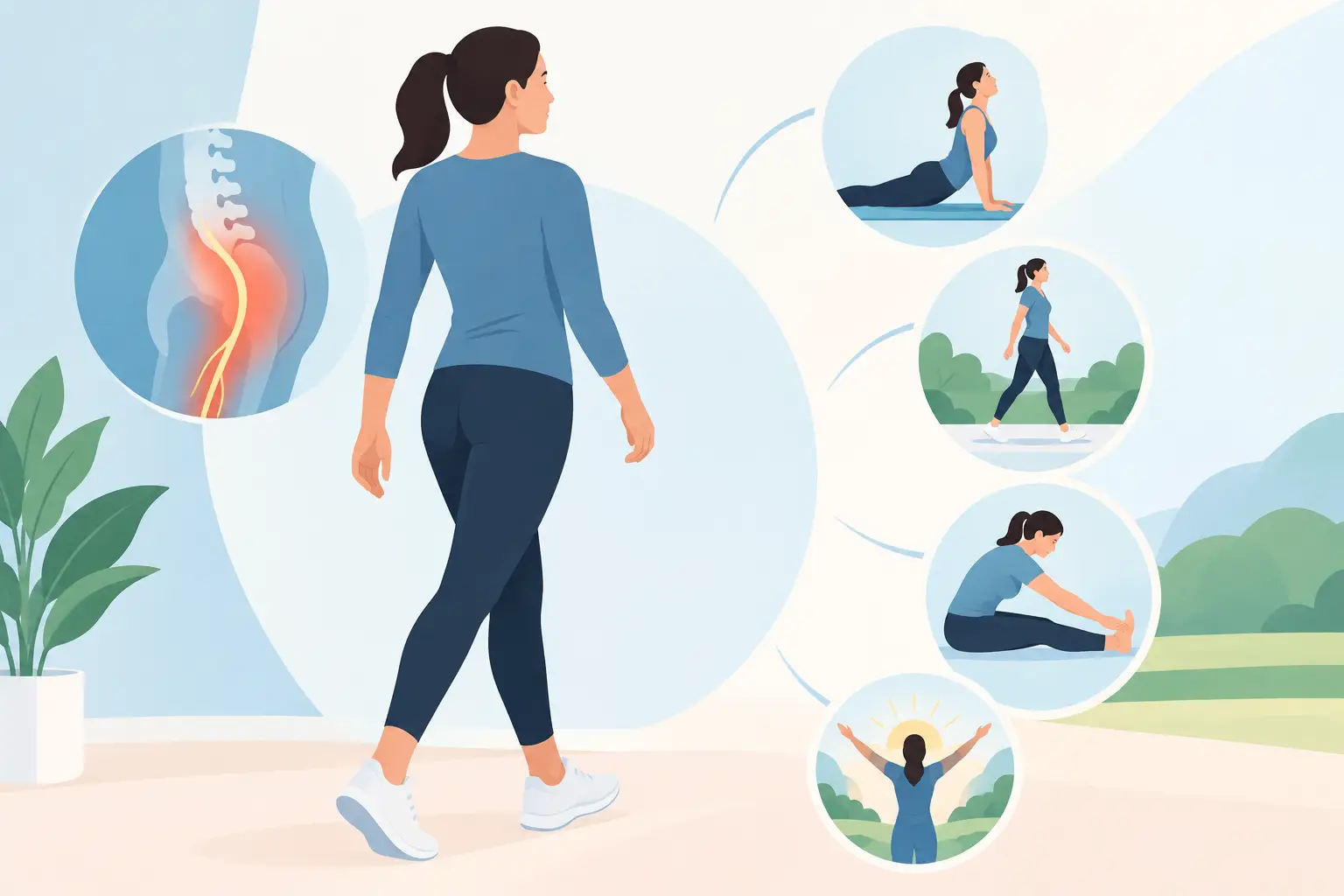
A sharp ache that starts in the low back and travels through the hip or leg can make ordinary moments feel difficult. Getting out of the car, carrying groceries, sitting through a work meeting, or sleeping comfortably may all become a challenge. This sciatica relief guide explains what may be causing that pain, what you can do at home, and when personalized care can help you get moving more comfortably.
What Sciatica Pain Usually Feels Like
Sciatica is not a diagnosis by itself. It describes symptoms that occur when the sciatic nerve, or one of the nerve roots that contributes to it, becomes irritated or compressed. The sciatic nerve runs from the lower back through the hips and down each leg, which is why symptoms often travel beyond the back.
Some people feel a burning sensation through the buttock and thigh. Others notice tingling, numbness, weakness, or a sudden electric-like pain down one leg. The discomfort may be mild at first and become more noticeable after long periods of sitting, bending, twisting, coughing, or lifting.
Not every pain in the hip or leg is sciatica. Tight muscles, joint irritation, a hip condition, or circulation concerns can sometimes cause similar symptoms. A proper evaluation helps identify whether the pain pattern is consistent with sciatic nerve irritation and what factors may be contributing to it.
Common Reasons Sciatica Develops
Sciatica can come on suddenly after an awkward lift or injury, but it can also build gradually. A disc in the lower back may irritate a nearby nerve root. Changes in the joints of the spine, narrowing around the nerve pathways, muscle tension, or prolonged pressure from sitting can also play a role.
Daily habits matter, too. Long commutes, desk work, repetitive bending, physically demanding jobs, and returning to exercise too quickly after time off can all place extra strain on the lower back and hips. For some patients, there is one clear trigger. For others, the issue is a combination of movement habits, reduced mobility, and accumulated physical stress.
Age, previous injuries, pregnancy, and overall activity levels can affect how the body responds. That is one reason a one-size-fits-all sciatica plan is rarely the best answer. The right approach depends on your symptoms, health history, movement limitations, and goals.
Sciatica Relief Guide: What to Do at Home
When pain first flares, complete bed rest is usually not the answer. Staying in one position for too long can increase stiffness and make it harder to return to normal movement. Gentle activity within your comfort level is often more helpful than trying to push through severe pain or avoiding all movement.
Start by changing positions regularly. If sitting worsens symptoms, stand and walk for a few minutes every 30 to 60 minutes. If standing is uncomfortable, try a short period of supported rest, then move again. Small, frequent changes can be easier on an irritated back than one long workout or one long period on the couch.
Heat or ice may offer temporary comfort, although the better choice depends on the person. Ice can feel useful during a newer flare-up with soreness after activity, while heat may help relax tight muscles and stiffness. Use either option for short periods with a barrier between the pack and your skin. If one makes symptoms worse, stop using it.
Gentle walking is often a practical place to begin. Start with a brief, level walk and pay attention to how your leg feels during and after. The goal is not to test your limits. It is to keep your body moving without causing a strong increase in pain, numbness, or weakness.
Simple mobility work may also help, but aggressive stretching can aggravate an irritated nerve. A stretch that causes sharp pain, increased tingling, or symptoms farther down the leg is not a helpful stretch. Focus instead on comfortable range of motion and controlled movement. A healthcare provider can recommend exercises that fit your specific condition rather than relying on a general video or routine.
Everyday Adjustments That Can Reduce Strain
You do not need perfect posture every minute of the day. The more useful goal is to avoid remaining in any one posture for too long. At a desk, keep frequently used items close enough that you do not repeatedly twist or reach. Support your low back if needed, keep both feet grounded when possible, and build in movement breaks.
When lifting, move close to the object before picking it up. Bend through the hips and knees, keep the item close to your body, and avoid twisting while carrying weight. If an object is awkward or too heavy, asking for help is a smart choice, not a setback.
Sleep can be difficult during a flare. Side sleepers may be more comfortable with a pillow between the knees, while back sleepers may benefit from a pillow under the knees. These positions do not cure sciatica, but they can reduce strain and help the back settle enough for more restful sleep.
Exercise is still valuable, but the timing and intensity matter. If running, heavy lifting, or high-impact workouts trigger symptoms, it may be wise to temporarily choose lower-impact activity while you recover. That does not mean giving up your normal routine forever. It means creating a path back to the activities you enjoy without repeatedly irritating the area.
When to Seek Professional Care for Sciatica
If leg pain is persistent, recurring, or limiting your ability to work, sleep, exercise, or care for your family, an evaluation can provide clearer direction. Care should start with listening to how your symptoms began, where they travel, what makes them better or worse, and how they affect your daily life.
At Summit Chiropractic & Massage, treatment is personalized around the patient rather than built around a standard sequence of visits. Depending on your needs, care may include chiropractic treatment to address restricted movement and joint function, massage-centered support for tight or overworked muscles, and practical recommendations for posture, activity, and recovery at home.
Chiropractic care is not appropriate for every cause of leg pain, and a responsible provider will consider whether your symptoms need medical imaging, another type of evaluation, or referral to a different healthcare professional. The goal is not simply to quiet pain for a day. It is to identify contributing factors and support safer, more comfortable movement over time.
Symptoms That Need Prompt Medical Attention
Most cases of sciatica improve with appropriate conservative care, but certain symptoms should not be managed at home. Seek prompt medical attention if you have:
- New loss of bladder or bowel control
- Numbness in the groin, inner thighs, or saddle area
- Significant or worsening leg weakness, including trouble lifting the foot
- Severe pain after a major fall, collision, or other trauma
- Fever, unexplained weight loss, or a history of cancer alongside new back and leg pain
These symptoms may point to a more serious condition that needs urgent medical assessment.
A Steady Return to Comfortable Movement
Sciatica recovery is often uneven. You may have a few better days followed by a temporary flare after gardening, travel, a long workday, or lifting something unexpectedly. That does not always mean you are back at the beginning. It can be useful information about how much activity your body can currently tolerate.
A gradual plan gives you room to build confidence. As pain settles and movement improves, you can increase walking, return to strengthening work, and resume the activities that make daily life feel like your own. The most helpful next step is usually a simple one: listen to your symptoms, avoid forcing painful movements, and get individualized guidance when the pain is keeping you from living comfortably.